
For many people around the world, periods are a monthly occurrence. And for most people who experience menstruation, the most common, and sometimes, cheapest option for absorption is the trusty single use pad and tampon. Packaged neatly in a plastic laminated box, in plastic wrap, made with plastic materials, and are single-use, made to be replaced multiple times a day to prevent infection or discomfort.
Every period is different, and for the past three years, due to my personal experience with my contraception, I have lived without a period. Since I was seventeen I haven’t had to worry about my monthly messy meeting with my uterus lining, and because of that, I also didn’t have to worry about my personal contribution to period based plastic waste.
That was until this year, when I experienced my first menstrual bleed in several years. Although the period itself took me by surprise, what really threw me was the waste I was producing to deal with my period. After going to the pharmacy to stock up on the sanitary products I had forgotten about so long ago, I could feel that something was wrong as I held the crinkling plastic wrapper that encased a box of Kotex tampons and their sanitary pad counterpart. As a young teenager, still living at home, whenever I got my period I just dug around in the period drawer to find my necessary products, and didn’t think much more about it. But standing in that pharmacy, tossing up between light and regular flow pads, I realised that if I was going to have my period again, I wasn’t going to be able to keep using single use sanitary items. Which is why I decided to start my journey into reusable period products.
Why Did I Pick HannahPads?
Although I had heard of such products before, I was still pretty uneducated on the wide world of eco-alternative period products, and to decide which one was for me would take a bit of research. I first considered a menstrual cup. Simple, yet effective. Easy to use, or so I had heard. And required little to no effort besides the cleaning out of the period blood and reinserting when necessary. While I considered this option I spoke to some friends about their experiences and looked up reviews online. All the comments seemed super subjective, and were based off of how comfortable each individual found them, their relationship with their periods, whether they preferred regular tampons instead of pads prior to making the change. There were a lot of variables. But, the comment that stuck out most to me, was whether the individual preferred tampons or pads. Personally, I was more of a pads person. Although I did love the freedom of movement that tampons gave me, if I could, I would always choose a pad. I preferred the feeling, the longer lasting qualities, the reapplication, as well as the comfort of just wearing a basic liner. So I had decided that a menstrual cup was not going to be my period product of choice.
My second consideration was period underwear. The idea seemed fairly appealing. Instead of even using a second product to attach to my underwear, my underwear would just act as my period product. This seemed like an ideal solution, and would also give me the freedom of a menstrual cup, with the comfort of a pad. After some research I looked into the brand ModiBodi, a period product provider that sells period underwear as well as a range of other products. However, although period underwear seemed like the perfect solution, price was also a factor. The prices on their site seemed to range from $25 to about $40 for individual underwear pieces depending on the style, absorbency, and purpose of the piece. And as each pair of underwear would only be worn for a day, to purchase enough pairs for a full period, or only buy a few to wash as I used them deterred me from this product.
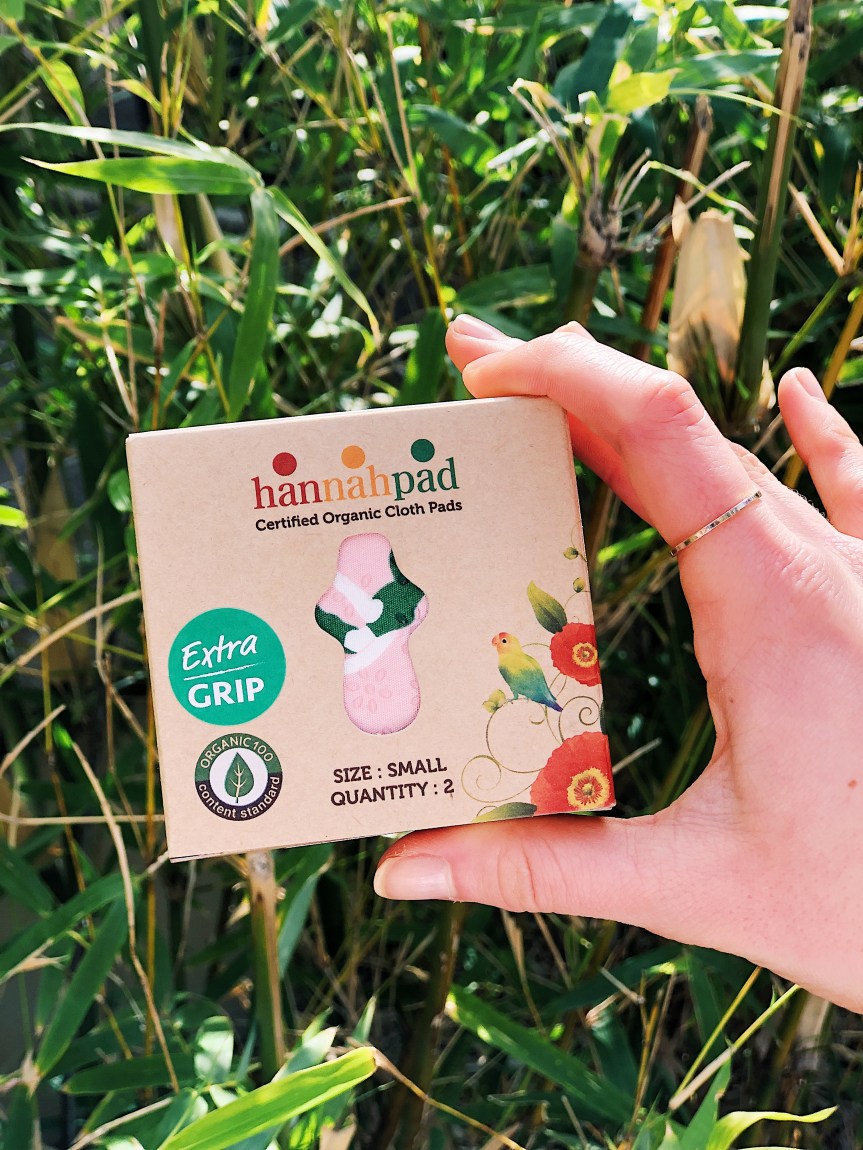
My final consideration, and ultimately my product of choice, was reusable, material pads. I had decided after looking into the above two options that I wanted to get something that was similar to a pad, without the priciness of period underwear, and that required some, but low, maintenance. Which is why I chose to invest in material pads from HannahPad. I had come across the brand before during my initial research into eco-conscious period products, and when I visited my local sustainable-store, EcoLateral, I decided that they would be my sanitary product of choice. Not only are they an Australia/New Zealand based brand, the material used is both toxic-free and 100% organic cotton. The use of such high quality cotton also means that the pad has superior absorption capacity, as well as being a breathable material and longer lasting, with a lifespan of 2-3 years, and a biodegrade time of 12 months, unlike many plastics which can take anywhere up to a couple of decades to hundreds of years to break down. It was these things and more that made me choose this particular brand and product. The two pack of extra grip, size small, material pads cost me $33.90, which was well within what I could afford. And with that, I had purchased my very first sustainable period product.
What Was It Like?
When trying my HannahPad for the first time I experienced a fairly light period. The morning that it started, I showered, brushed my teeth, got ready, and when it came time to get dressed I tried out my first pad. So instead of having an adhesive backing, the HannahPad has gripping dots that line the patterned side of the pad so secure it to the underwear material to keep it from slipping around. And instead of sticky wings, it has a clip to secure the wings underneath. Having no trouble with the application, next was seeing how it felt. The first sensation was the softness of the material. Unlike regular pads, which can often feel very synthetic and plasticy, the organic cotton was super soft, comfortable, and breathable. Although the thickness of the pad, which was only slightly more than a regular pad, was initially noticeable, throughout the day I allowed myself to forget I was even wearing it. Throughout the day I felt no movement of the placement of the pad, and the blood was absorbing incredibly quickly so it didn’t leave me with the usual feelings of squishy discomfort like regular pads. Although my flow was very light, I believe that even with a heavier flow I wouldn’t have experienced any leakage or odour, as the absorption and breathable fabric kept me feeling comfy and carefree.
Cleaning Up.
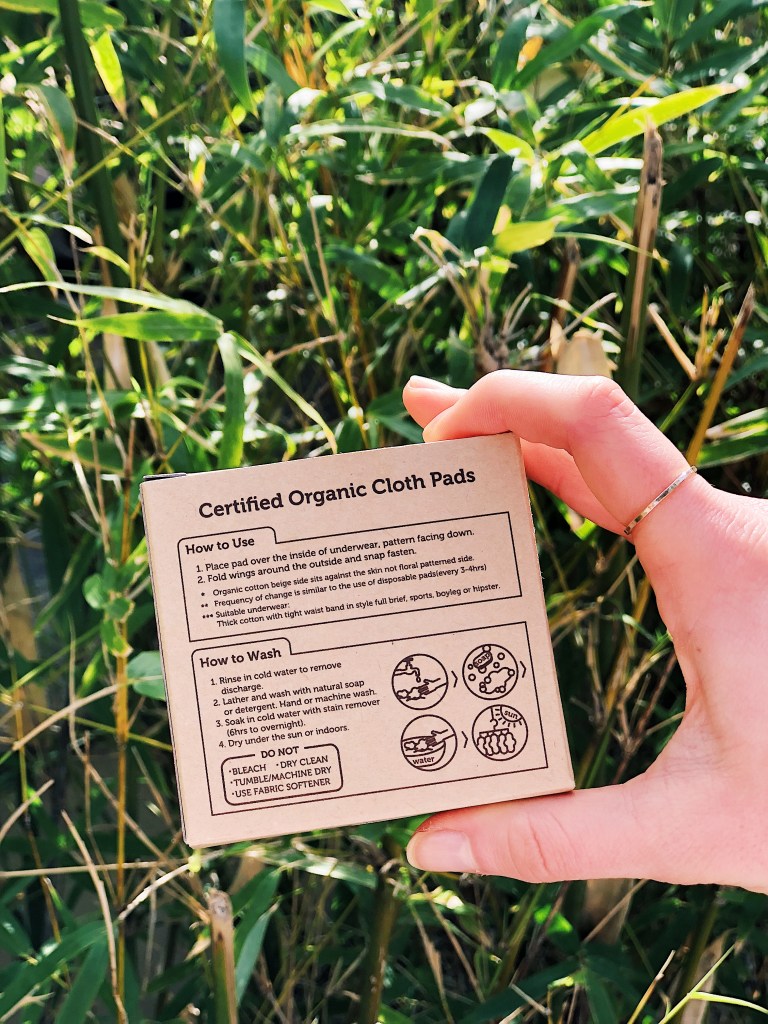
One of the reasons I decided on this product was the low maintenance cleaning. On the back of each box the instructions read;
- Rinse under cold water to remove any discharge.
- Lather using our probiotic soap or any natural laundry detergent.
- Soak in cold water for a minimum of 6 hours to overnight. Up to 48 hours if required, changing water daily.
- Hand wash or machine wash.
- Dry inside or outside, under the sun where possible.
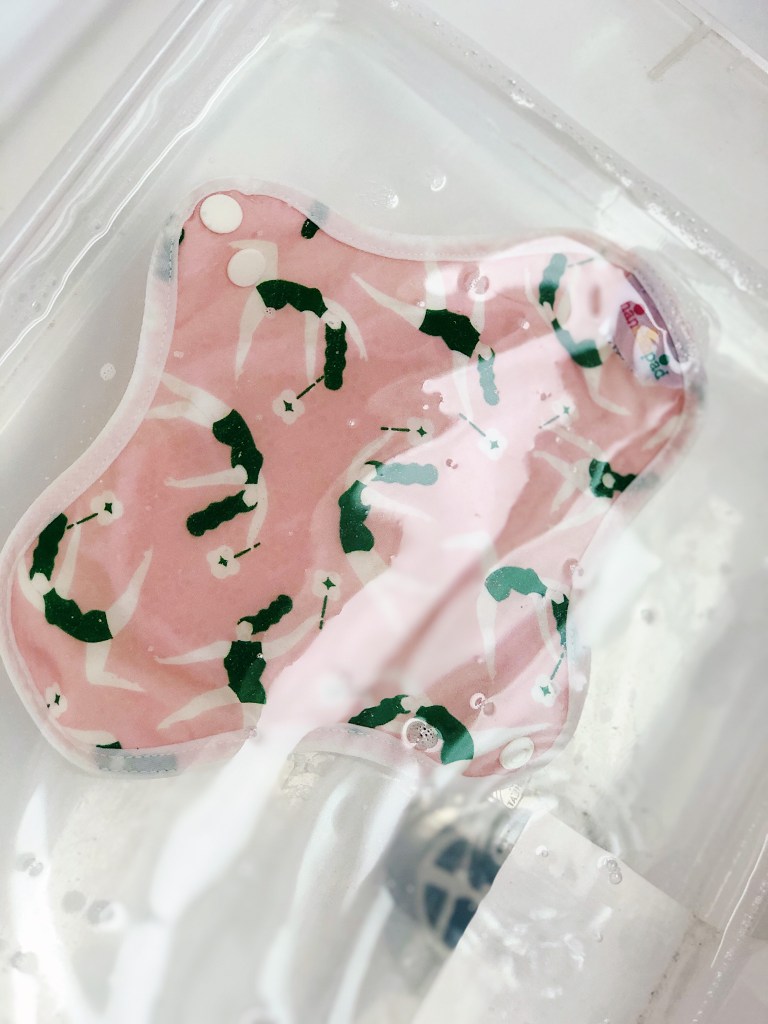
So after a full day of Uni and just doing whatever it is I do, I went to clean my material pad. To wash it I took an old plastic tub and filled it with warm water, mixed with a bit of laundry detergent. While the tub filled, I ran the pad underneath some cold water and got some of the more fresh blood out of the material, leaving just the stain. Spraying it with some Earth’s Choice stain remover, I submerged the pad in the warm soapy water and started working the stain out of the pad. I didn’t need anything more than some suds and my hands to get it out and after about five minutes of washing the pad was almost as good as new.
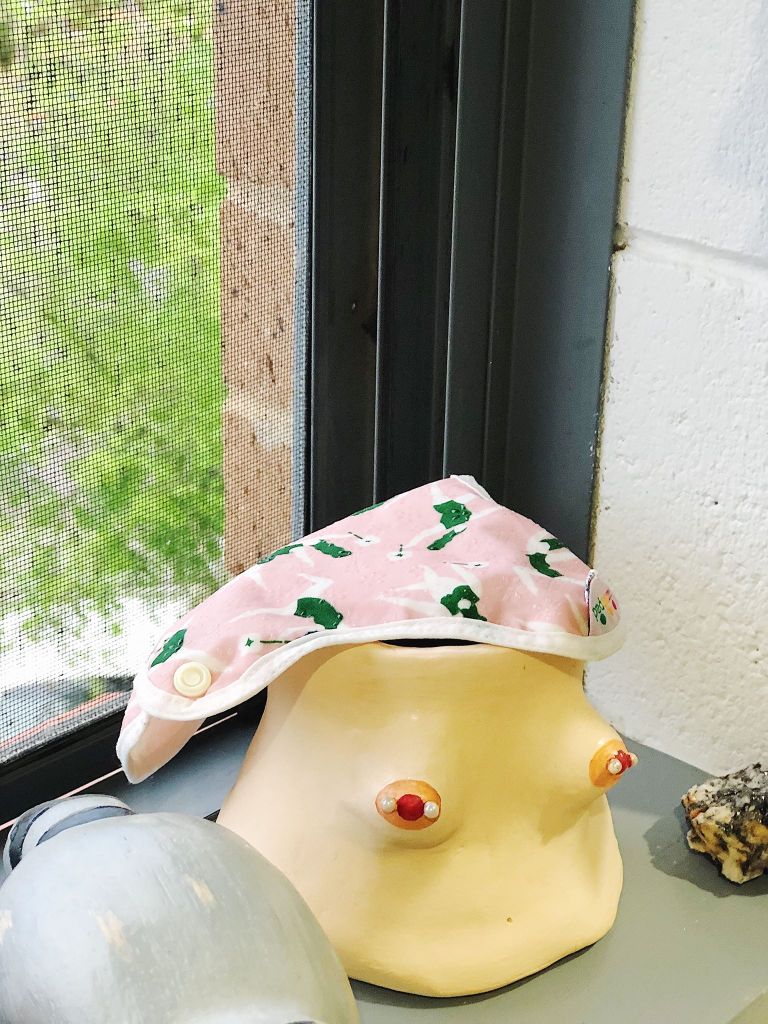
After washing it with soap, I rinsed it in some more cold running water and drained the material. Due to the light flow, after the wash I had gotten nearly all of the blood out. I thought it was probably not necessary to soak overnight as I had cleaned it pretty well myself, and left it to semi-dry (on my @doesmynippleoffendyou boob pot) enough to leave next to my laundry basket for my next load.
Once I put it through the wash, on cold cycle, the material pad had been thoroughly cleaned, hung to dry, and is now ready to use again!
Although I had initially thought making this change would be costly, time-consuming, and difficult overall, I found the journey interesting and enjoyable, and have come out the other side a little more knowledgable and a lot more eco-friendly when it comes to my period. For anyone thinking of switching to sustainable menstruation products, I would highly recommend HannahPad, or any other reusable period alternative, to single-use plastic sanitary products.
 All The Small Things
Menstrual cups FTW! 🙂 Too bad they don’t work for you! 😦
LikeLike